Loose Neck Skin: What Causes It and Your Non-Surgical Options
Date
Written by
Marsha Bensussen
Revised by
Amy B. Lewis, MD
You may first notice it in a photo taken from a low angle, or on a video call when you catch sight of your own screen. The skin beneath your jaw looks a little looser than it used to, fine creases catch the light, or vertical bands seem more visible when you speak. If that sounds familiar, you’re not alone: the neck is often one of the first places these changes show up.
The Short Answer
Loose neck skin usually reflects a mix of changes in the skin, fat distribution, and neck muscles. Daily SPF and moisturizing skincare can help with dryness and fine creasing, while Sofwave™, an FDA-cleared, non-invasive ultrasound treatment, can lift lax neck and submental (under-the-chin) tissue. Significant excess skin or prominent muscle bands may call for a surgical consultation.
Why Signs of Aging Can Stand Out on Your Neck
Your neck can be one of the first places you notice signs of aging. Its thinner skin is affected by changes in collagen and elastin over time, while years of sun exposure can add to these changes, especially when sunscreen stops at the jawline.
Changes beneath the skin can affect the shape of your neck and jawline too. Fat distribution and support from the chin and jaw influence the contour, while the platysma (the broad, thin muscle across the front of your neck) can become more visible as vertical bands.
If you noticed loose neck skin after substantial weight loss, read more about what happens to neck and submental skin after weight loss.
What Causes Crepey Neck Skin?
“Crepey” describes thin-looking skin with many shallow, papery creases. When comparing crepey neck treatment options, it helps to distinguish fine creasing from tissue laxity, fat-related fullness, and visible muscle bands.
Age-related changes, sun damage, and dryness can make fine creases more noticeable. Laxity refers to tissue that hangs or folds as support changes.
Read more about what causes crepey skin and how its appearance may be improved.
Are “Turkey Neck,” Jowls, and Double Chin Different?
These terms describe different changes around your neck and jawline, although they can occur together:
“Turkey neck” may refer to loose neck skin, visible vertical bands of the platysma muscle, or both.
Jowls develop when tissue descends along the lower jawline.
A double chin describes fullness beneath the chin, which may involve fat, lax tissue, or both.
If your concern is a “turkey neck” or double chin, the cause matters when considering Sofwave™. Sofwave™ is FDA-cleared to lift lax submental and neck tissue, but it does not reduce fat. Prominent muscle bands are a separate concern and require assessment.
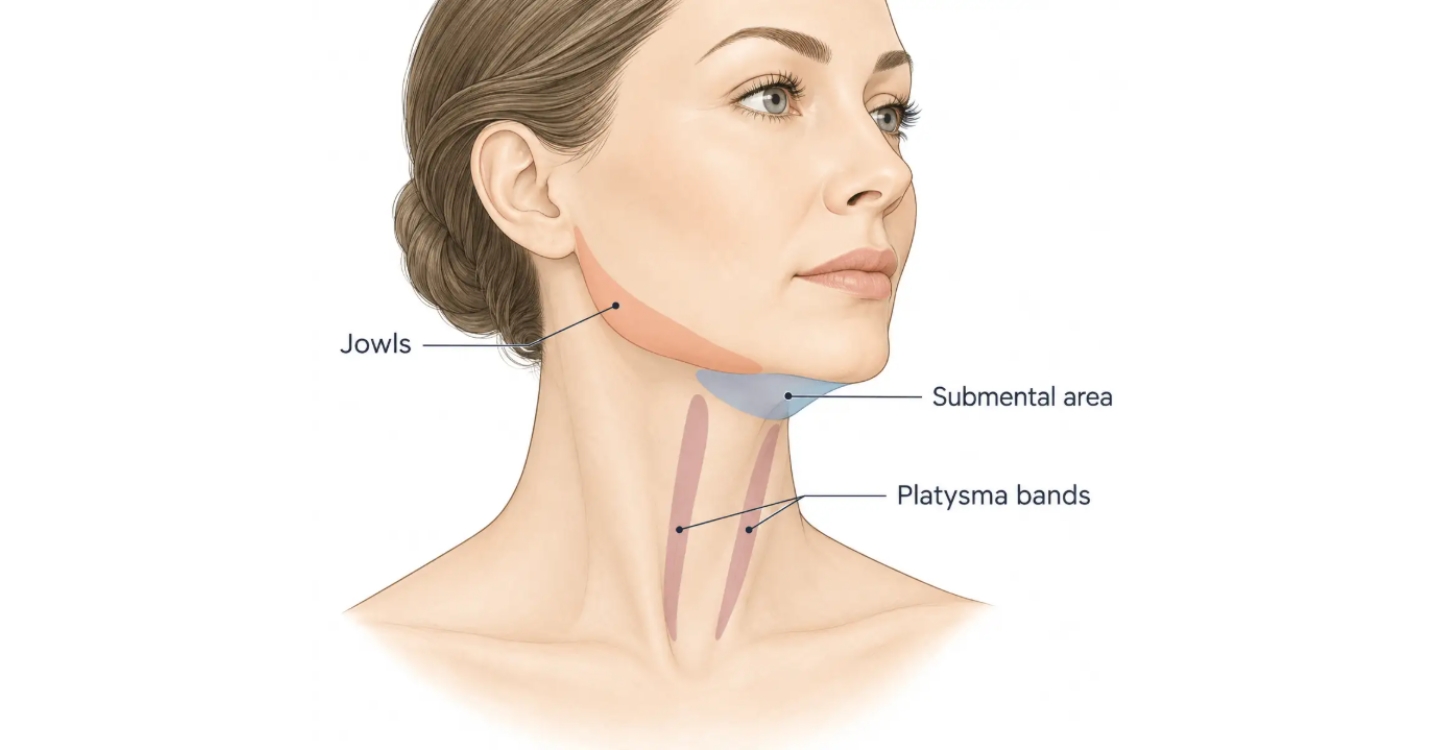
Jowls are not specifically named in Sofwave™’s cleared lifting indications. A provider can assess which areas are contributing to your concern. Read more about lower-face treatment options.
How to Tighten Neck Skin: What Actually Helps
At-home care, in-office procedures, and surgery address different aspects of neck aging. The right approach depends on the main concern and how much change you hope to achieve.
At-Home Care and Lifestyle Measures
A simple routine can reduce dryness and fine creasing while limiting further sun damage. Skincare does not lift lax tissue, remove excess skin, or correct prominent muscle bands.

Apply daily SPF below your jawline. Use broad-spectrum SPF 30 or higher on your neck and upper chest, and reapply every two hours outdoors or after swimming or sweating.
Introduce retinoids gently. Retinoids can help with fine lines and photoaging, but neck skin may be more prone to dryness and irritation. A dermatologist can advise on an appropriate product and frequency.
Choose moisturizing ingredients. Hyaluronic acid helps retain moisture and ease dryness-related creases. Some peptide-containing formulas may improve the appearance of fine lines, but evidence is limited and product-specific.
Keep lifestyle measures in perspective. Stay hydrated and maintain a stable weight, as significant changes can affect neck contour. Sleep position has not been shown to improve laxity.
In-Office Non-Surgical Treatments
Ultrasound and radiofrequency treatments use heat to stimulate collagen production. Ultrasound delivers energy beneath the skin without needles, with treatment depth varying by device. Non-invasive RF uses a handpiece on the skin, while RF microneedling delivers heat through small needles at selected depths.
Fat-directed injections work differently: deoxycholic acid breaks down fat cells beneath the chin. These injections address fat-related fullness and do not remove excess skin.
The FDA has reported serious complications with certain uses of RF microneedling, including burns, scarring, fat loss, and nerve damage. Deoxycholic acid injections also carry risks, including nerve injury and difficulty swallowing. A provider can assess which approach may be appropriate for your neck.
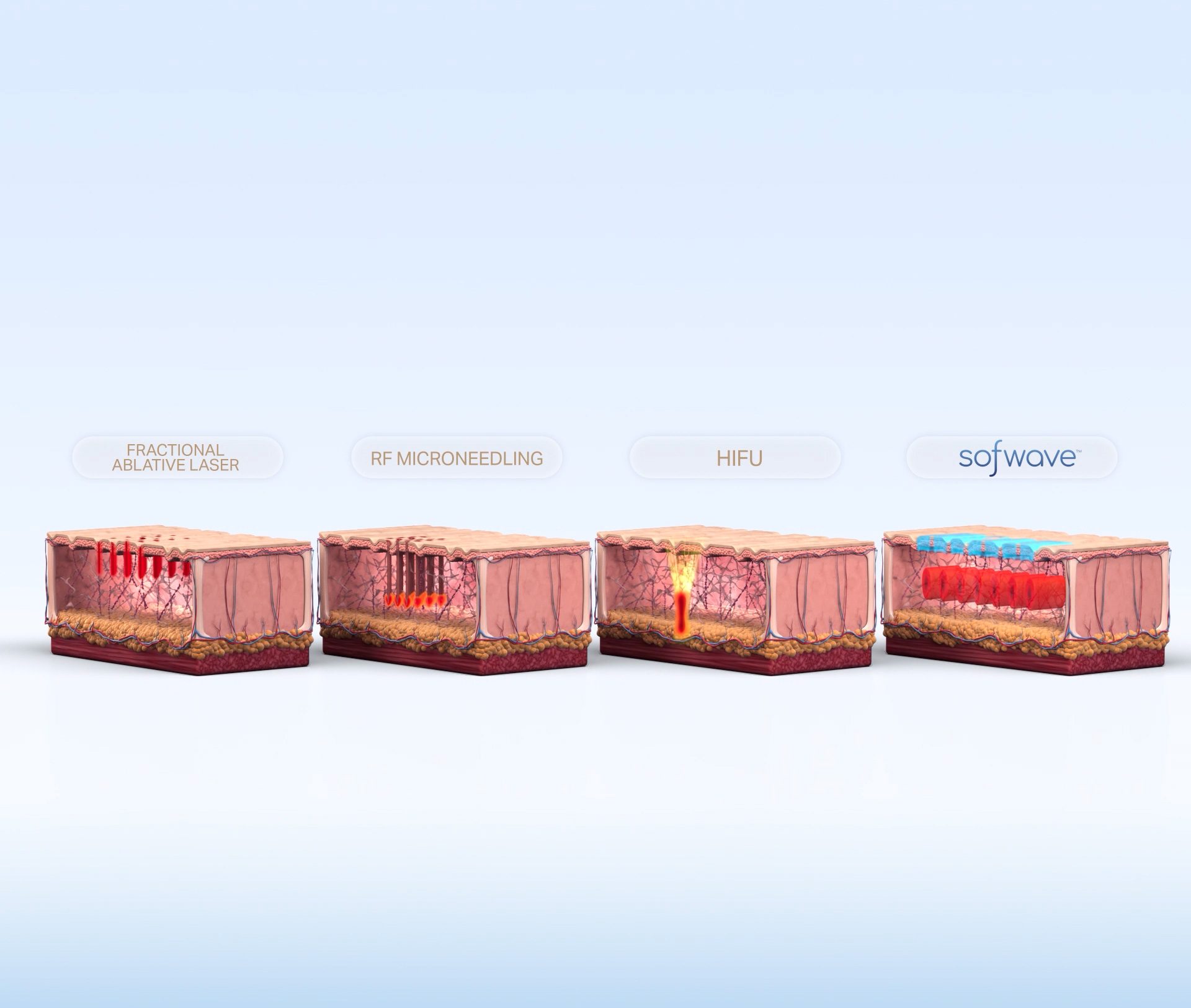
Sofwave™: An FDA-Cleared Option for Lax Neck and Submental Tissue
Sofwave™ is a non-invasive, completely needle-free ultrasound treatment. Its SUPERB™ technology delivers synchronous parallel ultrasound beams to an average depth of about 1.5 mm in the mid-dermis, where it stimulates the growth of new collagen and elastin. In the United States, Sofwave™ is FDA-cleared for adults aged 22 and older to lift lax submental and neck tissue. It is not cleared to reduce submental fat.
A full face and neck treatment typically takes 30-45 minutes, and most patient discomfort can be managed with a topical anesthetic. There are no limitations on skin type, and most patients can resume their daily activities quickly afterward. Treatment plans and individual results vary. You can see neck and submental before-and-after images and discuss realistic expectations with a qualified provider.

Surgical Neck Lift
Significant neck laxity or excess skin may warrant a consultation with a plastic surgeon. A surgical neck lift can remove excess skin, address muscle banding, and reduce fat beneath the chin where appropriate.
Initial downtime is typically around two weeks, although recovery varies and swelling may take longer to fully settle. Your surgeon can advise when to resume work and exercise.
The American Society of Plastic Surgeons’ 2024 report gives a projected surgeon-fee range of $7,500–$13,000 for a neck lift, excluding anesthesia and facility fees.

Comparing Your Neck Options
The term non-surgical neck lift can refer to different in-office approaches, so it is useful to compare what each option addresses, the treatment plan, downtime, onset, and invasiveness.
Which Neck Treatment Option May Be Appropriate?
Loose neck skin can reflect lax tissue, excess skin, fat-related fullness, visible muscle bands, or a combination of these changes. Treatment therefore depends on what is contributing most to the appearance of your neck.
Sofwave™ is FDA-cleared to lift lax neck and submental tissue, but it does not reduce fat or remove excess skin. A qualified provider can assess your anatomy, treatment goals, and medical history and discuss which options may be appropriate.
Frequently Asked Questions
How to tighten neck skin without surgery?
Non-surgical options depend on what is causing the neck changes. Skincare can help with dryness and fine creasing, while a provider can assess whether an energy-based treatment may be appropriate for neck laxity. Non-surgical treatments cannot remove significant excess skin.
What causes crepey neck skin?
Crepey neck skin is associated with age-related collagen and elastin changes, cumulative sun exposure, and reduced hydration. It describes fine, papery creasing rather than one deep fold. Laxity and visible platysma bands may overlap with this appearance but are separate concerns.
Can Sofwave™ treat the neck and jowls?
Sofwave™ is FDA-cleared to lift lax neck and submental (under-the-chin) tissue, so the neck is within its cleared treatment areas. Jowls sit along the lower jawline and are not named as a separate lifting indication. A provider can assess whether the area behind your concern falls within the cleared neck or submental treatment area.
How long does it take to see neck results?
In published Sofwave™ studies of the neck and submental area, results were assessed at follow-up visits around three and six months after treatment, as improvement develops gradually with collagen remodeling. Individual timelines and results may vary.
Is Sofwave™ treatment painful?
Most people feel heat and some discomfort while the ultrasound energy is delivered, and the sensation varies from person to person. Most of that discomfort can be managed during treatment with a topical anesthetic. Sofwave™’s built-in SofCool™ cooling also protects the outer layer of your skin throughout the session. In a published clinical study of Sofwave™ for the eyebrow, submental, and neck areas, patients described treatment pain as tolerable. Your provider can tell you what to expect and how comfort is managed at their clinic.
How many Sofwave™ sessions will I need for my neck?
Many people need a single session, and a full face and neck treatment typically takes 30-45 minutes. Results develop gradually as new collagen and elastin form, so your provider may check your progress at a follow-up visit. In some cases they may suggest an additional session. The right plan depends on how much laxity there is in your neck and submental area and on your goals. Your provider can explain what a realistic treatment plan looks like for you.
Does Sofwave™ work on all skin types?
Yes. Sofwave™ has no limitations on skin type, so it can be considered for lighter and darker skin tones alike. It delivers ultrasound energy to the mid-dermis at a depth of approximately 1.5 mm while built-in cooling protects the skin’s surface, and no penetration of the skin is required. In clinical testing, no bruising, ulceration, or skin pigmentation were reported. Your provider will still review your skin and medical history before recommending treatment.
Talk to a Provider About Your Neck
Noticing changes in your neck is common, and you have more options than ever to address them without surgery. A qualified provider can assess what’s contributing most to your concern and whether Sofwave™ is right for you. Find a Sofwave™ provider near you.
References
- U.S. Food and Drug Administration. SofWave System 510(k) Summary, K250146. 2025. https://www.accessdata.fda.gov/cdrh_docs/pdf25/K250146.pdf
- Chung MMH, Wong CSM, Chan MWM, et al. Evaluating the Use of High-Intensity Non-Focused Ultrasound Treatment to Improve Skin Laxity and Facial Wrinkles in Asian Patients. Lasers in Surgery and Medicine. 2026;58(8):637–643. doi:10.1002/lsm.70153. https://pubmed.ncbi.nlm.nih.gov/42226470/
- Gold MH, Biron J. Efficacy and safety of high-intensity, high-frequency, non-focused ultrasound parallel beams for facial skin laxity. Journal of Cosmetic Dermatology. 2024;23(1):117–123. doi:10.1111/jocd.16098. https://pubmed.ncbi.nlm.nih.gov/38031530/
- Mariwalla K, Fabi S, Belkin D, et al. Assessing the Submental and Neck Region. Dermatologic Surgery. 2025;51(12S):S31–S37. doi:10.1097/DSS.0000000000004937. https://pubmed.ncbi.nlm.nih.gov/41325037/
- Kim E, Cho G, Won NG, Cho J. Age-related changes in skin bio-mechanical properties: the neck skin compared with the cheek and forearm skin in Korean females. Skin Research and Technology. 2013;19(3):236–241. doi:10.1111/srt.12020. https://pubmed.ncbi.nlm.nih.gov/23441628/
- Siddiqui Z, Zufall A, Nash M, et al. Comparing Tretinoin to Other Topical Therapies in the Treatment of Skin Photoaging: A Systematic Review. American Journal of Clinical Dermatology. 2024;25(6):873–890. doi:10.1007/s40257-024-00893-w. https://pubmed.ncbi.nlm.nih.gov/39348007/
- American Society of Plastic Surgeons. Neck Lift. https://www.plasticsurgery.org/cosmetic-procedures/neck-lift
- American Society of Plastic Surgeons. Neck Lift Cost. https://www.plasticsurgery.org/cosmetic-procedures/neck-lift/cost
- American Society of Plastic Surgeons. Neck Lift Recovery. https://www.plasticsurgery.org/cosmetic-procedures/neck-lift/recovery
- Al-Omair A, Bukhari A. Patient satisfaction of microfocused ultrasound treatments on the face and neck laxity: A narrative review. Journal of Cosmetic Dermatology. 2023;22(10):2671–2676. doi:10.1111/jocd.15766. https://pubmed.ncbi.nlm.nih.gov/37128835/
- Araújo AR, Soares VP, Silva FS, Moreira TS. Radiofrequency for the treatment of skin laxity: myth or truth. Anais Brasileiros de Dermatologia. 2015;90(5):707–721. doi:10.1590/abd1806-4841.20153605. https://pubmed.ncbi.nlm.nih.gov/26560216/
- Cleveland Clinic. Radio Frequency (RF) Microneedling. https://my.clevelandclinic.org/cosmetic-plastic-surgery/procedures/radio-frequency-rf-microneedling
- AbbVie. Kybella® (deoxycholic acid) Prescribing Information. https://www.rxabbvie.com/pdf/kybella_pi.pdf
- U.S. Food and Drug Administration. Potential Risks with Certain Uses of Radiofrequency (RF) Microneedling — FDA Safety Communication. October 15, 2025. https://www.fda.gov/medical-devices/safety-communications/potential-risks-certain-uses-radiofrequency-rf-microneedling-fda-safety-communication