Which Skin Lifting Technology Delivers the Best Results?
Date
Written by
Bella Gitnik
Revised by
Amy B. Lewis, MD
There is no single skin lifting technology that delivers the best results for every patient. Sofwave parallel ultrasound, microfocused ultrasound, and monopolar radiofrequency use different mechanisms to address skin aging, and their effectiveness depends on the treatment area, individual concerns, and desired outcomes. Sofwave offers a clinically studied, FDA-cleared, non-invasive approach using SUPERB™ parallel ultrasound technology to stimulate collagen remodeling. The best choice depends on the patient's needs, clinical evidence, safety considerations, and treatment goals.
What is the fairest way to compare these treatments?
Start with your goal. Fine lines, skin texture, laxity appearance, and eyebrow position are not the same problem. Also, neither is a wish for subtle improvement is not equivalent to a wish for substantial tissue repositioning. A useful comparison designates the desired outcome before comparing potential devices.
Throughout this article, lifting means a lifter-looking “more lifted” appearance associated with restored structure, elasticity, and support. It does not mean a device intrinsically lifts skin, and immediate thermal shrinkage should not be confused with durable remodeling.
For patients considering non-invasive aesthetic treatments, Sofwave offers a clinically studied approach that targets the dermis while preserving the skin surface. Its indications make Sofwave particularly relevant for patients seeking improvements in facial, neck and upper arms appearance without undergoing surgical procedures.
How do the mechanisms differ?
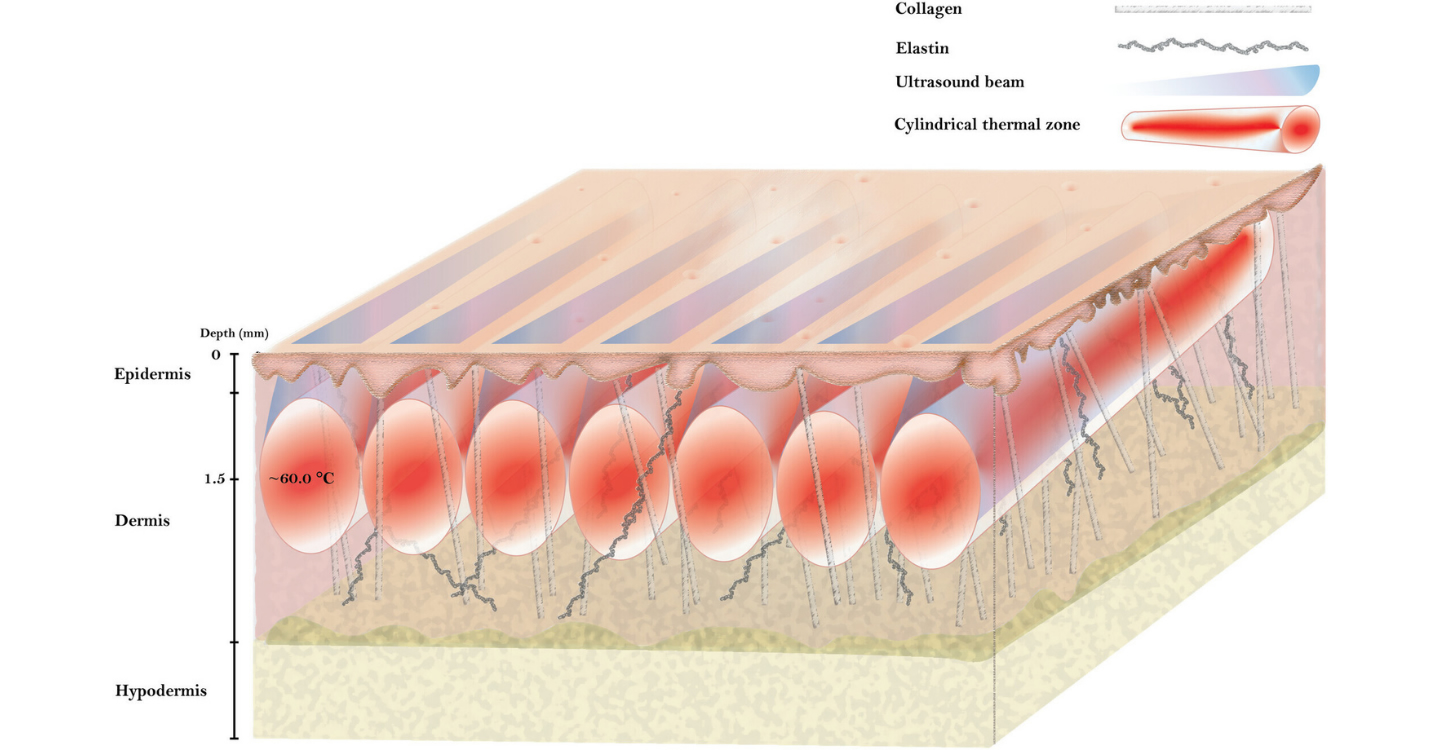
Sofwave delivers non-focused parallel ultrasound for dermal treatment. Microfocused ultrasound concentrates energy at selected focal locations, sometimes with imaging guidance. Monopolar RF delivers electrical energy that generates heat in tissue. These are different delivery methods, not automatic rankings of benefit.
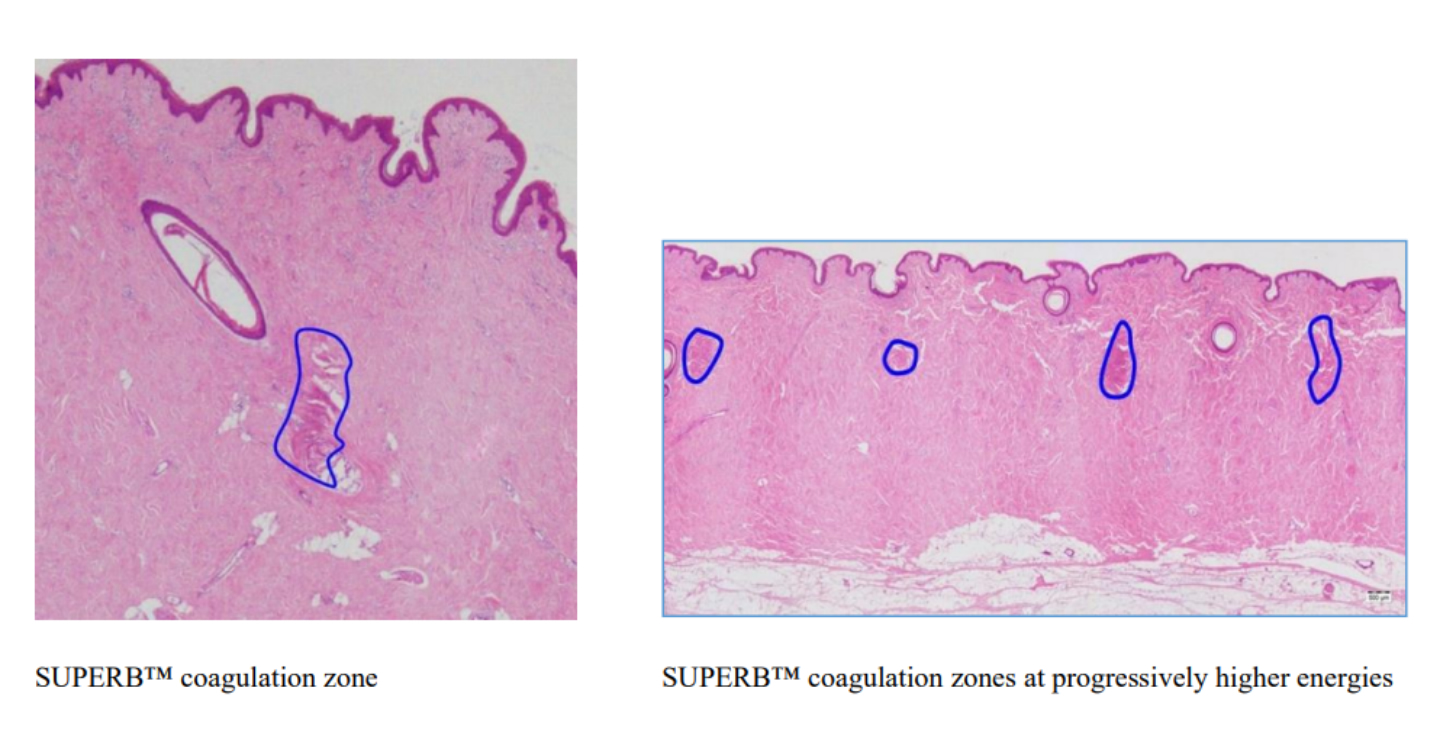
Sofwave's platform uses non-focused, planar 11.5 MHz ultrasound. SUPERB means Synchronous Ultrasound Parallel Beam. A manufacturer overview characterizes most thermal effect at approximately 0.5–2 mm, but that is not a fixed anatomical cutoff or uniform treatment of every dermal layer.
A distinguishing feature of Sofwave's SUPERB™ technology is its delivery of synchronous ultrasound energy through parallel beams, creating controlled thermal effects in the dermis. The treatment is designed to stimulate the body's natural collagen-remodeling response while the integrated Sofcool™ system helps protect the epidermis. This combination of dermal targeting and surface cooling is central to Sofwave's approach to non-invasive aesthetic treatment.
Unlike technologies that emphasize reaching deeper tissue structures, Sofwave is designed around a defined dermal treatment approach. This distinction is relevant because collagen remodeling within the dermis improves the appearance of wrinkles and skin laxity. Greater treatment depth alone should not be interpreted as evidence of greater clinical effectiveness.
Microfocused ultrasound with visualization, abbreviated MFU-V, combines treatment with ultrasound imaging. That feature helps clinicians assess treatment delivery; it does not prove that every treatment performed with imaging has greater efficacy than every treatment without it.
Monopolar RF should likewise be identified by the actual device, generation, settings, and protocol. Findings from an older system do not automatically describe every current platform.
An additional consideration for patients comparing these technologies is how each device delivers energy and manages the skin surface during treatment. Sofwave combines parallel ultrasound delivery with integrated epidermal cooling, offering a specific technological approach to dermal remodeling.
What outcomes have actually been studied?
Human studies report aesthetic outcomes for all three categories. Their endpoints and methods differ, so percentages from separate trials should not be treated as a direct contest. Ask what changed, how it was assessed, and at which follow-up visit.
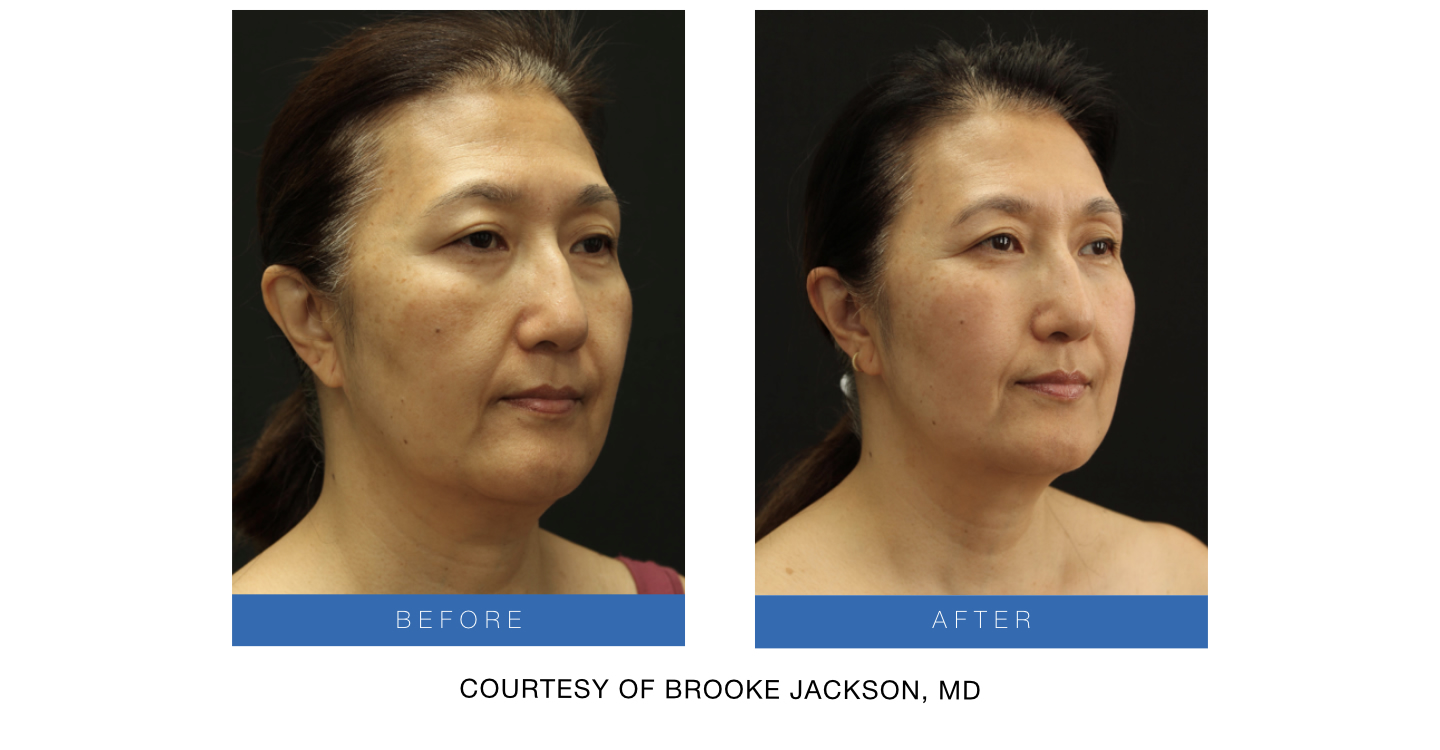
Sofwave's FDA clearance includes eyebrow and lax submental and neck tissue lifting, as well as facial lines and wrinkles. Its clearance summary describes masked photographic review and quantitative imaging. A separate small published study assessed facial appearance after two treatments.
“An improvement pattern was detected in all treated areas in both follow-up visits”
— Michael H. Gold, MD, and Julie Biron, study authors, 2024 [2]. Excerpt from the published study.

One important advantage when evaluating Sofwave is the availability of device-specific clinical evidence supporting its cleared aesthetic indications. The FDA clearance documentation includes assessments of facial wrinkles and tissue lifting using defined clinical evaluation methods. This provides patients and clinicians with a regulatory and clinical basis for discussing expected treatment outcomes rather than relying solely on general claims about ultrasound technology.
Published clinical research has also examined Sofwave's effects on facial skin appearance. The prospective study by Gold and Biron evaluated changes in facial skin laxity following treatment, contributing additional evidence about the technology's aesthetic applications. Although the study's limitations must be considered, it adds to the body of research available when discussing Sofwave with patients.
In an MFU-V pilot study, 20 people were treated, but only 14 had photographs evaluable for the primary blinded assessment. The investigators also reported patient and physician ratings over follow-up. Those denominators and endpoint differences matter: favorable satisfaction ratings are not interchangeable with blinded photographic improvement.
An older multicenter RF study examined periorbital wrinkles and brow-position outcomes. It provides evidence that monopolar RF has clinical effects worth evaluating, not proof that every current RF platform delivers superior lifting. It’s This study results concern describes a specific anatomical area with and an older device; the results should not be generalized into an effect-size estimate for all current RF systems.
How strong are claims that one approach is superior?
A broad superiority claim requires a relevant, adequately designed direct comparison. Separate studies, different body areas, manufacturer diagrams, or a device's depth alone cannot establish that one option is generally best for facial lifting.
The MFU-V pilot was small and industry-sponsored. Those facts do not make their findings meaningless, but they limit how confidently the results can be generalized or ranked.
A small direct parallel-beam–MFU-V study on upper arms has been reported, but that body site and design do not establish facial equivalence, noninferiority, or general superiority. Similar-looking results in a small study are not the same as a trial designed to demonstrate equivalence.
“The MFU-V treatment took more time to perform than the HIUS treatment.”
— Loyal, Hartman and Goldman, study authors, 2026.
The randomized split-body study comparing high-intensity parallel ultrasound beams with MFU-V for upper-inner-arm skin laxity is particularly relevant because it evaluates two ultrasound approaches within the same clinical investigation. The study reported comparable improvements at its assessed follow-up, while the parallel-beam treatment required less procedure time. These findings offer useful evidence regarding treatment efficiency and clinical outcomes in the studied body area, although they should not be extrapolated into claims of superior facial lifting.
Clearance is another separate question. FDA-cleared indications describe authorized uses; they do not turn a substantial-equivalence decision into a head-to-head clinical superiority verdict.

What should patients compare about discomfort, risk, and recovery?
Ask about the expected experience and uncommon but meaningful complications for the exact device and treatment area. Noninvasive does not mean painless or risk-free, and a favorable small study cannot exclude rare adverse events.
The Sofwave clearance study reported treatment discomfort. The MFU-V pilot used oral pain medication in its participants. Different pain-control methods make casual numerical comparisons between studies especially unreliable.[1][4]
“All our subjects that participated in this study could return to their normal life activities with no downtime”
— Michael H. Gold, MD, and Julie Biron, study authors, 2024.
Monopolar radiofrequency device's manufacturer information describes potential effects including redness, swelling, blisters, burns, scarring, and surface irregularities. Its information also advises disclosure of implanted electrical devices. These are reasons to discuss suitability carefully, not reasons to assume all RF treatments have identical risks.
The likely recovery may differ from the full range of possible complications. Ask what is common, what is uncommon but serious, what aftercare is required, and whom to contact if recovery departs from expectations. Personal medical history and prior procedures belong in that conversation.
Recovery planning also means separating time away from usual activities from the time needed to judge a final result. A person may feel ready to return to work before a study-style follow-up assessment would be meaningful. Ask about both timelines rather than accepting a single no-downtime label.
Because Sofwave is a non-invasive treatment designed to preserve the skin surface, it may appeal to patients who want to address visible signs of skin aging without the recovery associated with ablative resurfacing procedures.
Where does laser resurfacing fit into this comparison?
Laser resurfacing is a useful reminder that depth alone does not predict outcome, but it is a different treatment decision. Ablative techniques remove tissue, and their healing demands differ from procedures designed to leave the surface intact. CO2 and Er:YAG resurfacing should not be collapsed into one depth or downtime figure. Full-field and fractional techniques differ, and the ablation zone is not identical to the surrounding thermal effect. Settings, passes, and tissue characteristics influence both.
Published laser work reports changes in wrinkles, texture, and laxity appearance. That supports considering the procedure for an appropriate concern; it does not establish universal superiority over Sofwave, MFU-V, or monopolar RF. More recovery is not itself evidence of a better result.
What are the key takeaways for choosing a treatment?
The most useful comparison connects a specific concern to a specific device and evidence base. A clinician should explain both the rationale and the limits, rather than promising a winner based on depth.
• Name the outcome before choosing the technology.
• Separate regulatory indications from study findings and marketing descriptions.
• Compare the same body area, endpoint, and follow-up whenever possible.
• Include pain management, aftercare, complications, and alternatives.
• Treat small studies and manufacturer claims with appropriate qualification.
For patients considering Sofwave, several characteristics are worth discussing during a consultation: its SUPERB™ parallel ultrasound technology, dermal treatment approach, integrated Sofcool™ cooling system, FDA-cleared aesthetic indications, and available clinical research. Together, these provide a defined framework for evaluating the technology's potential role in addressing skin laxity.
What questions do patients often ask when comparing devices?
Patients commonly want to know which treatment is strongest, whether combining methods is necessary, and whether photographs settle the issue. Each question requires more context than a device label provides.
Can ultrasound treatments really lift sagging skin?
Certain ultrasound technologies have demonstrated improvements in the appearance of skin laxity and lifting in clinical studies. Sofwave's SUPERB™ technology delivers controlled heat into the dermis to stimulate collagen remodeling. It is FDA-cleared for eyebrow lifting and lifting lax tissue beneath the chin and on the neck. Results vary, and non-invasive treatments cannot reproduce the degree of tissue repositioning achieved through surgery.
How long do results from ultrasound skin treatments last?
Ultrasound skin treatments stimulate collagen remodeling, which develops gradually over time. The duration of visible improvements depends on the technology, treatment protocol, individual skin condition, age, and natural aging process. Sofwave uses parallel ultrasound beams to target the dermis, but the length of results varies between patients. A qualified provider can explain expected results and whether maintenance treatments may be appropriate.

Are ultrasound skin lifting treatments painful?
Ultrasound-based skin treatments can cause sensations of heat or discomfort during energy delivery. The experience varies according to the technology, treatment settings, and individual sensitivity. Sofwave incorporates Sofcool™ epidermal cooling to help protect the skin surface during treatment. Patients should discuss expected discomfort and available pain-management options with their provider.
Can ultrasound skin lifting cause facial fat loss?
The risk of unwanted facial volume changes depends on the technology, treatment depth, energy settings, and individual anatomy. Sofwave'sSUPERB™ technology is designed to target the dermis, with its manufacturer describing the primary thermal treatment region at approximately 0.5–2 mm beneath the skin surface, rather than intentionally targeting facial fat.
What is the difference between Sofwave parallel-beam ultrasound and focused ultrasound?
Parallel-beam ultrasound and focused ultrasound differ in how they distribute thermal energy within tissue. Sofwave uses non-focused, synchronous parallel ultrasound beams designed to create controlled thermal effects in the dermis. Focused ultrasound concentrates energy into discrete treatment zones at selected depths. Neither greater treatment depth nor focused energy delivery alone guarantees better aesthetic outcomes.
How should you prepare for a balanced consultation?
Bring your priorities and recovery constraints, then ask for a device-specific explanation of expected benefit, uncertainty, risks, and alternatives. The goal is an informed choice, not the deepest treatment or the most dramatic promise.
Ask how your baseline and follow-up will be documented and what would count as a meaningful improvement. A clear answer should leave room for no treatment or a different approach when the proposed procedure does not match your goals.
Find a Sofwave Provider Near You and take the next step toward naturally refreshed-looking skin.
References
- FDA K211483: SofWave System, 15 November 2021 https://www.accessdata.fda.gov/cdrh_docs/pdf21/K211483.pdf
- Gold and Biron. Facial skin laxity prospective study. J Cosmet Dermatol. 2024;23:117–123 https://onlinelibrary.wiley.com/doi/full/10.1111/jocd.16098
- Suh et al. Clinical and pathologic results. J Cosmet Dermatol. 2025;24:e16670; online 12 November 2024 https://onlinelibrary.wiley.com/doi/full/10.1111/jocd.16670
- Werschler and Werschler. MFU-V customized vectoring pilot. J Clin Aesthet Dermatol. 2016;9(2):27–33 https://jcadonline.com/long-term-efficacy-of-micro-focused-ultrasound-with-visualization-for-lifting-and-tightening-lax-facial-and-neck-skin-using-a-customized-vectoring-treatment-method
- Fitzpatrick et al. Multicenter ThermaCool TC study. Lasers Surg Med. 2003;33:232–242. Abstract and funding disclosure accessed https://onlinelibrary.wiley.com/doi/10.1002/lsm.10225
- Alexiades-Armenakas et al. Fractional CO2 review and multicenter study. J Drugs Dermatol. 2011;10(4):352–362 https://bemedico.be/wp-content/uploads/2022/03/SXDOT_Armenakasal_JDD_Apr2011.eng_.pdf
- Sofwave manufacturer technology page; accessed 3 November 2026 https://sofwave.com/providers/technologies/sofwave
- Gotkin et al. Microablative CO2 laser. J Drugs Dermatol. 2009;8:138–143. Abstract accessed https://pubmed.ncbi.nlm.nih.gov/19213229
- Sofwave manufacturer technical overview. A novel approach to treating fine lines and wrinkles. Ruthie Amir, 2020 https://api.sofwave.com/app/uploads/2026/08/A-novel-approach-to-treating-fine-lines-and-wrinkles-of-the-face-using-Synchronous-Ultrasound-Parallel-Beam-Technology-SUPERB%E2%84%A2.pdf
- Loyal, Hartman and Goldman. Randomized split-body upper-inner-arm comparison. Dermatol Surg. 2026. PMID 41025649; abstract accessed https://pubmed.ncbi.nlm.nih.gov/41025649